
By Nicolás Rosenberg
Chorus Effect: The Subtle Architecture of Width and Movement
From Enya and Vangelis to the Roland Jazz Chorus and Boss CE-1, chorus reshapes how we hear space, depth, and motion in a mix. A tour of what chorus does, where it shines, and the hardware that defined its sound.
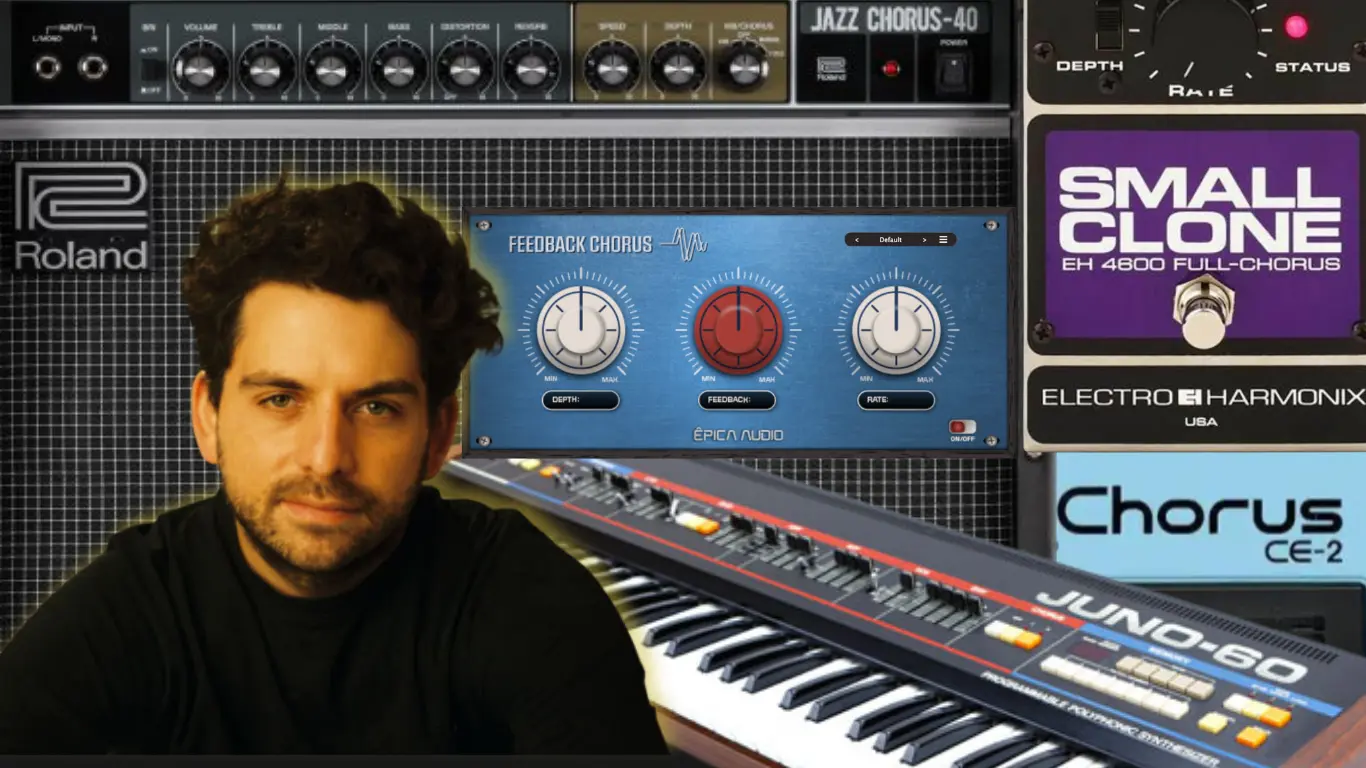
I grew up listening to Enya and Vangelis in my mother's car, sitting in the back seat and staring out the window as if I were floating in a cloud. Between the emotional depth of these two artists, there was one element that always felt almost magical in the warm pads—something I couldn't quite name at the time. It took me years to realize what I was hearing: the chorus effect in the synthesizers. So let's talk about chorus!
Among the many tools that have shaped modern recorded sound, chorus remains one of the most quietly influential. It rarely dominates a mix in the way distortion or reverb can, yet its presence is deeply felt. Chorus does not simply alter a signal—it reshapes how we perceive space, depth and multiplicity within sound.
At its core, the chorus effect is built on a simple but powerful idea: no two performances are ever perfectly identical. By recreating that natural variation artificially, chorus transforms a single sound into something that feels like an ensemble.
Technically, this is achieved by duplicating the original signal, introducing slight detuning between the copies and delaying them by a few milliseconds. These mini delays are often modulated over time using a low-frequency oscillator, creating subtle fluctuations in pitch and timing. The result is a layered signal in which each component is nearly identical, yet never quite the same.
This small instability is what gives chorus its character. The ear interprets these variations not as separate sounds, but as a single, richer source. What emerges is a sense of width, increased harmonic density and gentle motion. A static signal becomes dimensional; a dry recording becomes spatial and alive.
This perceptual transformation explains why chorus has been so effective across a wide range of musical elements. Backing vocals treated with chorus can expand across the stereo field, creating a supportive bed behind a dry lead vocal without competing for attention. The effect is both cohesive and expansive, enhancing clarity while adding depth.
On guitar, chorus has defined entire eras. Clean tones, in particular, benefit from its ability to introduce shimmer and movement. The fluid, almost liquid texture associated with players like Andy Summers (The Police) became a hallmark of the 80s guitar sound, demonstrating how modulation could turn simplicity into atmosphere.
Synthesizers especially get a different kind of life through chorus. By introducing slight imperfections, the effect softens rigid waveforms and creates evolving textures. This is central to designing an "organic" sound.
Bass guitar can also benefit when chorus is applied with restraint. A subtle application adds harmonic richness and presence, as heard in the expressive playing of Jaco Pastorius. However, excessive use risks compromising low-end clarity, which is why it is often used selectively or in parallel processing.
The history of chorus is inseparable from the hardware that defined its sound. Everything started with a guitar amp. In 1976, in Hamamatsu, Japan, Roland Corporation made a guitar amplifier with a chorus unit: the Roland JC-120 Jazz Chorus. Its clean tone and built-in stereo chorus defined the sound of players like Johnny Marr from The Smiths, Tame Impala and James Hetfield from Metallica. As we can see, chorus is not attached to any music style.
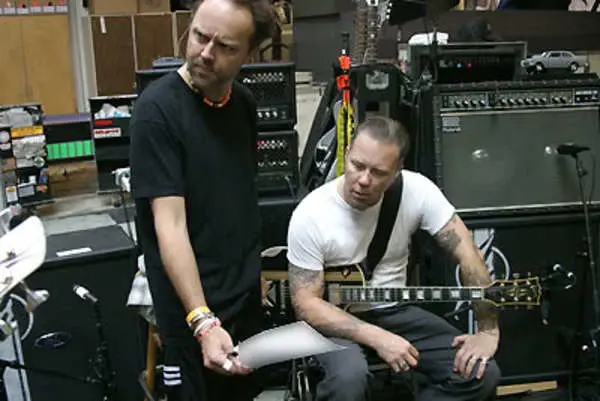
The first standalone chorus unit was the Boss CE-1 Chorus Ensemble, built in Japan by Roland Corporation in 1976. Used by such a range of artists as Brian May of Queen to Dimebag Darrell from Pantera, Vangelis to Aphex Twin, it established the foundational tone of analog chorus, later refined by the Boss CE-2, built in 1979. Both became massive in music production in the 80s, especially for keyboards and guitars, the CE-2 favored for its warmth and musicality by players including Flea from Red Hot Chili Peppers.
The Electro-Harmonix Small Clone, built in NYC in 1979, introduced a deeper, more pronounced modulation but without a wet/dry mix control. It became closely associated in the 90s with Kurt Cobain (Nirvana) and Daft Punk — sounds like a wild comparison, but it's not entirely fair, since Daft Punk probably used a whole range of different chorus units.
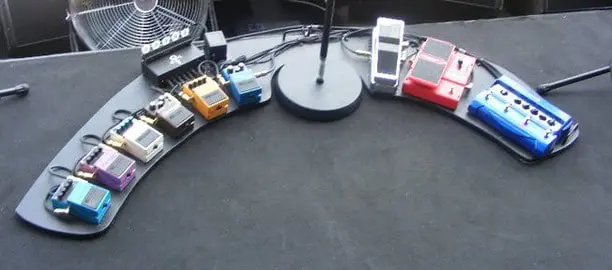
Later, digital chorus expanded the palette further. The Boss CE-5, built in 1991, offered greater flexibility and clarity, used effectively in different styles by artists like Prince or Eddie Van Halen — notably, Van Halen used to use his own DIY chorus unit before this.
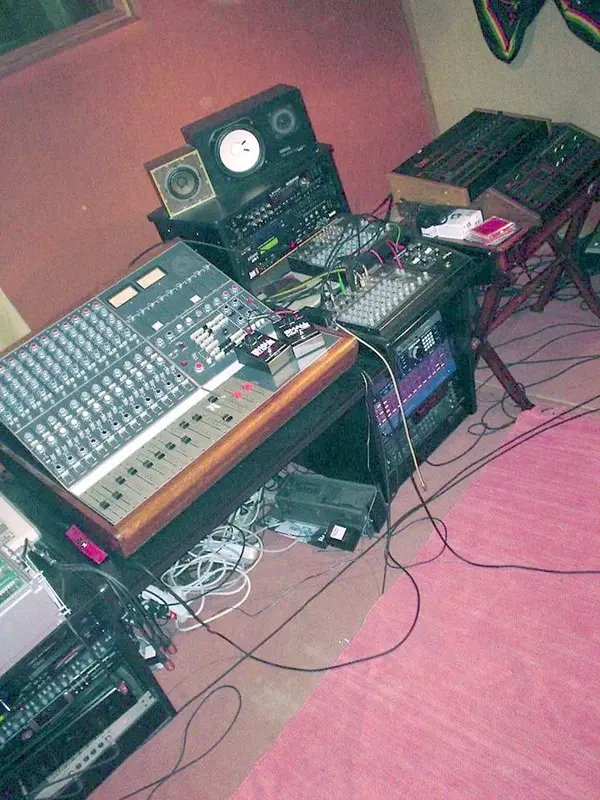
In the studio domain, units such as the Roland Dimension D SDD-320 in '79 and the Boss Dimension C DC-2 in '85 refined chorus into something more transparent — less an audible effect, more a spatial enhancement. These tools became staples for producers like Brian Eno in his DX7 years but also with U2. Meanwhile, multi effect processors like the Eventide H3000 in 1989, extended the concept into micro-pitch shifting and complex modulation, shaping the expansive tones associated also with Eno but also with Gustavo Cerati or Animal Collective.
Similarly, the onboard chorus of the Roland Juno-60 helped establish the lush, immersive textures heard in the work of Enya and Nils Frahm. Even earlier, instruments such as the Yamaha CS-80 contributed to the evolving language of modulation, a sound world closely associated with Vangelis.
After a period of relative restraint in the 2000s — when production trends leaned toward clarity and minimalism — chorus has re-emerged in contemporary music. Artists such as Turnstile, Mk.gee, Charli XCX and even Taylor Swift have reintroduced modulation as a central expressive tool, often using it in understated ways that prioritize texture over effect.
This renewed interest reflects a broader shift in production aesthetics. In an era where digital tools allow for near-perfect precision, there is growing value in reintroducing subtle instability and movement. Chorus provides exactly that: a controlled form of imperfection that enhances rather than obscures.
Ultimately, the enduring appeal of chorus lies in its ability to expand a sound without overwhelming it. It creates width without excess, movement without distraction and depth without density. A mono signal can be opened into stereo space; a simple part can take on the presence of many.
It is this balance — between clarity and complexity, control and variation — that ensures chorus remains not just relevant but essential.