
By Nicolás Rosenberg
Compression: The Effect You Feel Before You Understand
Why compression takes years to truly hear—from threshold and attack/release to glue on drums, intimacy on vocals, and weight on bass. Plus two hidden gems: the transparent DBX 119 compander and the rave-era pump of the Alesis 3630.
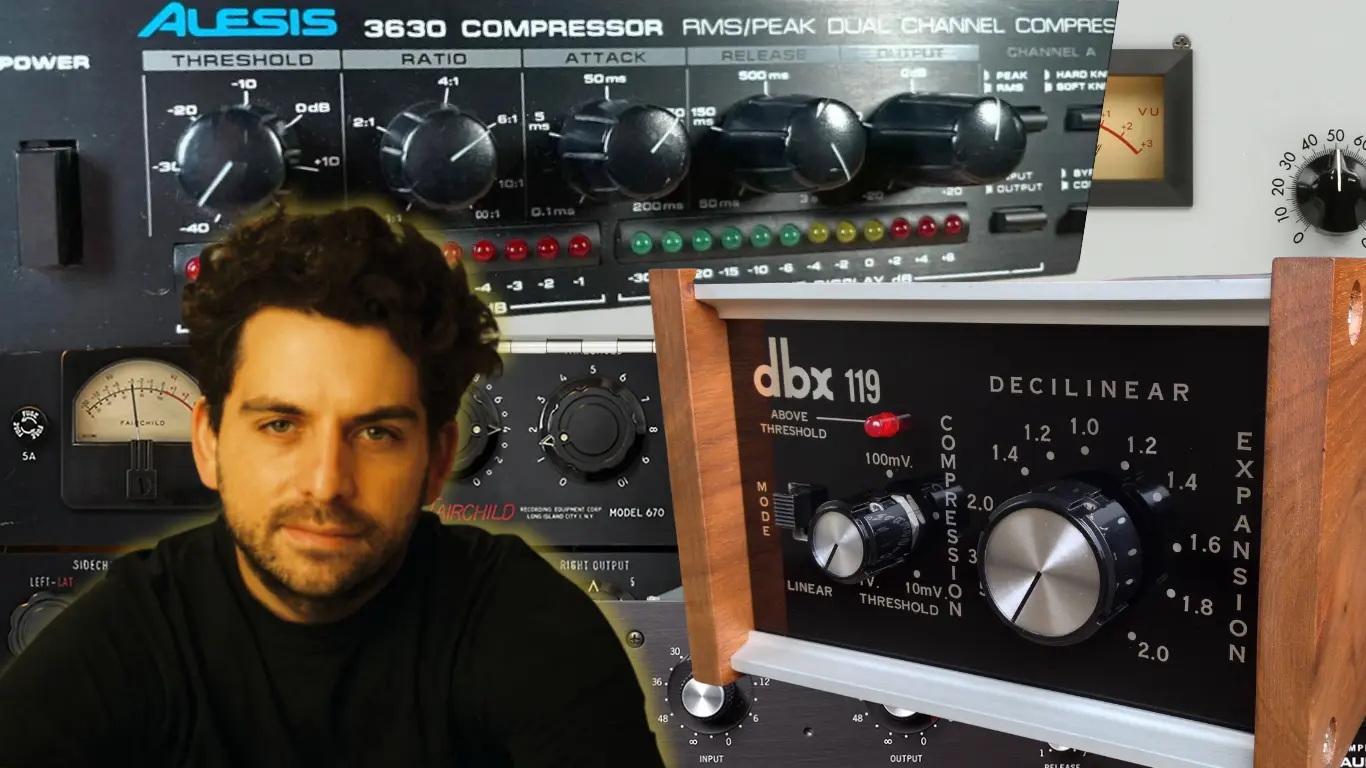
In my journey through music, compression has been one of the hardest effects to truly understand. To be honest, I'm still not sure I fully do and I know I'm not alone in that.
So, what is compression?
At its core, compression is the process of reducing the dynamic range of a signal—the difference between its loudest and quietest parts—without necessarily drawing attention to the process itself. It works by reducing gain whenever the signal exceeds a defined threshold.
Two controls shape how it behaves: attack—how fast the compressor clamps down once a sound crosses the threshold—and release—how long it holds on before letting go. These two parameters might be the most expressive tools in audio. Change them, and you don't just change the volume. You change the feel of time.
Think about live drums. Raw, uncompressed drums feel open and unpredictable; nothing is held back. Add compression and suddenly the kit feels glued together like a single living organism. The kick and snare sit with more authority: controlled, intentional, and consistent.
On vocals, compression brings forward quieter details while taming peaks. The voice becomes present, intimate, like someone singing directly into your ear. Compressing vocals is essential: if the singer sings too quiet, compressing will make it bigger, and if the singer is too loud, even screaming, you can tame it.
A bass guitar without compression can feel uneven, with notes jumping out or disappearing. With compression, it becomes a steady foundation—solid, almost physical. You don't just hear it; you feel it in your chest.
Compression is simple in concept, but deep in practice. Maybe that's why it takes time not just to understand it, but to really hear it.
Hidden Gems
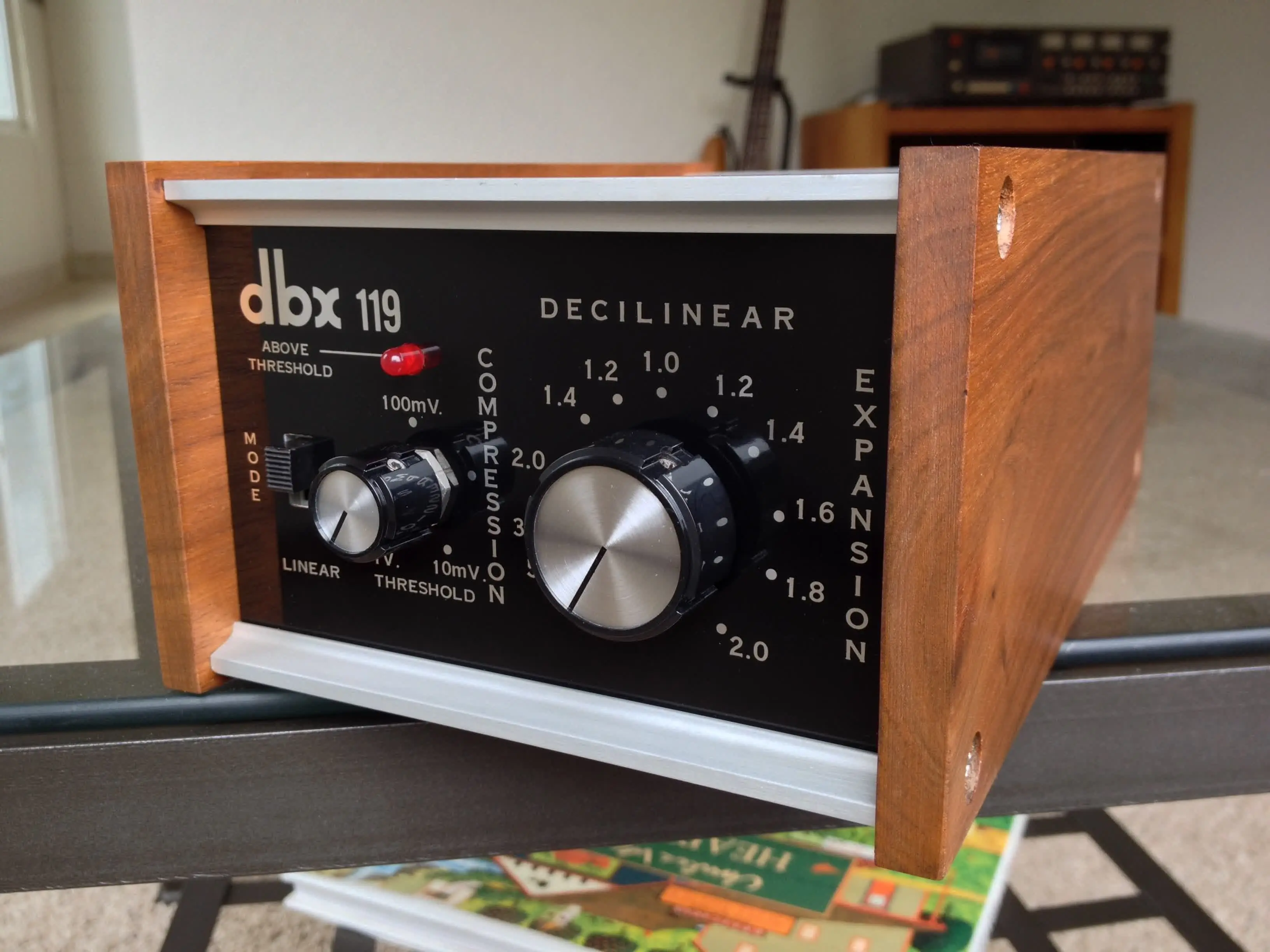
DBX 119 — The Expander. Built in the 1970s in Waltham, Massachusetts, the DBX 119 never had a signature sound the way the LA-2A or 1176 did. That was the point. Where those machines color and shape, the 119 simply controls — transparent, precise, almost invisible. It's a compander: a compressor and expander in one unit. The expander is its quiet power, widening the space between sounds and giving a mix more definition and air. We used it once on the master of a whole EP with my band Boraj and the expander did something almost impossible to explain — more presence, more punch, without squeezing anything. Its big brother, the DBX 160, ended up on the drums of Tame Impala's Lonerism, where that same precision became part of the record's dense, pressurized sound.
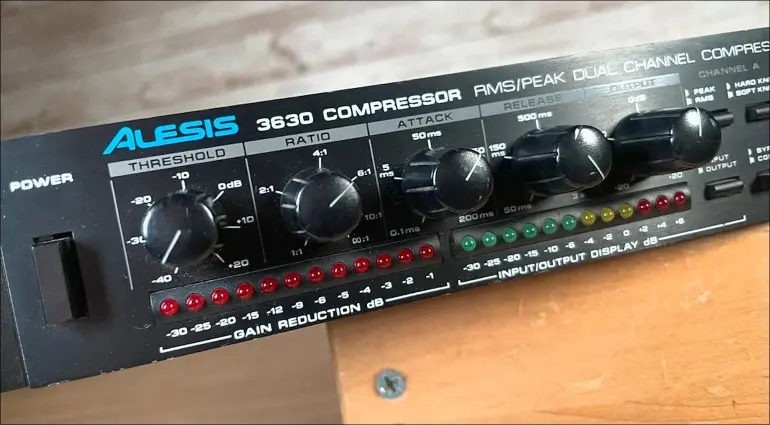
Alesis 3630 — The Pump. Released in the early '90s, the Alesis 3630 was never a prestigious studio tool: it's cheap, often criticized, and completely unpretentious. But in the hands of late-'90s producers, its aggressive VCA behavior and exaggerated ducking became the point. When the kick hits, everything compresses, then releases. You don't just hear the rhythm, you feel the air move. That push and pull, the music breathing with every beat, became the heartbeat of rave. Daft Punk understood that imperfection itself can be an instrument.